

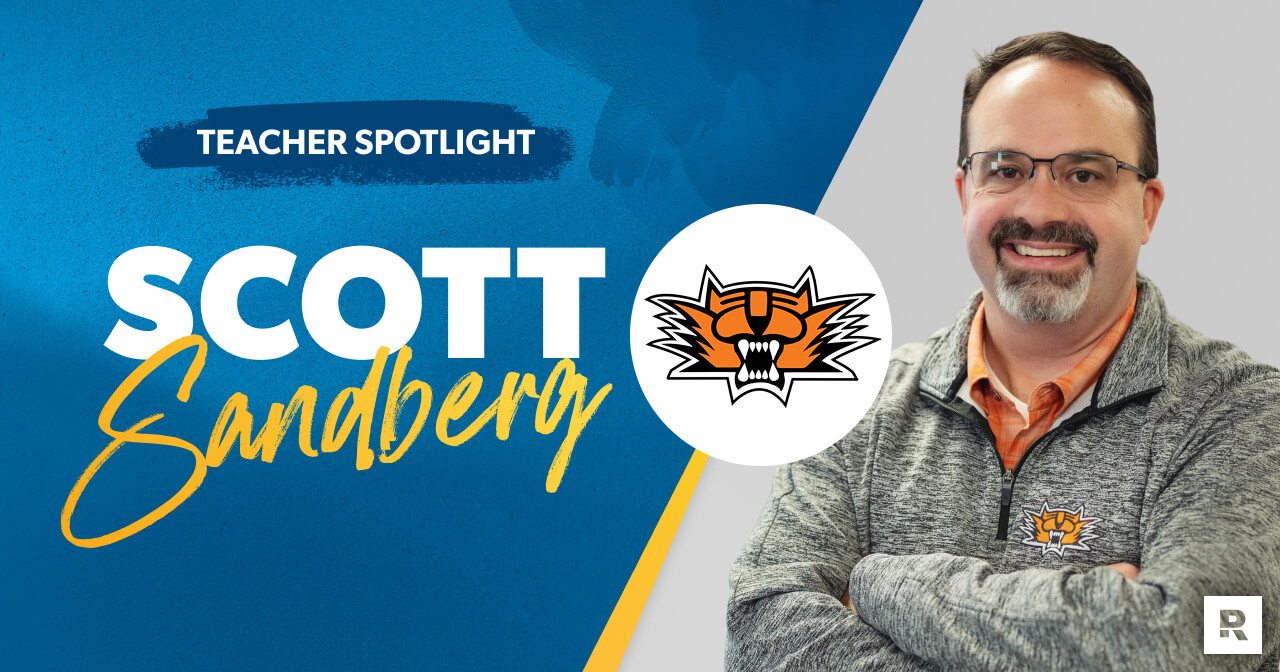
Why One Instructor Believes Private Finance Belongs in Each Excessive College
When Scott Sandberg asks his new college students in the event that they suppose they’ll change into millionaires, just a few fingers go up.
After three weeks of his private finance class, almost each hand is raised.
The second when college students understand what’s attainable formed Scott’s profession. For greater than 14 years, he’s taught Ramsey Training’s Foundations in Private Finance throughout two districts. He’s pushed by the idea that college students can change their monetary future.
At Ephrata Excessive College in Washington, private finance isn’t a commencement requirement, however Scott’s decided to see that change. However in his classroom private finance is handled as important. College students finances, debate real-life trade-offs, simulate emergencies, apply for scholarships, and apply long-term excited about cash.
“I’ve had mother and father come as much as me and say, ‘Thanks for educating this class. That is the primary time my scholar really talks about faculty,’” Scott says. “Youngsters want this type of training.”
Educating From Expertise
Scott’s dedication to non-public finance training didn’t begin within the classroom. It began almost 27 years in the past, when he met Dave Ramsey at an occasion and commenced his personal debt-free journey.
“I adopted Dave’s philosophy, however I did it ‘Dave-ish,’” Scott admits. “It obtained me out of debt, however it didn’t change my habits.”
That modified after what he jokingly calls “car-mageddon”—a season when three out of 4 household automobiles wanted pricey engine or transmission repairs on the similar time.
“My spouse and I checked out one another and stated, ‘We make an excessive amount of cash for this,’” he remembers. “That was the catalyst.”
That have shapes how Scott teaches. Having realized the identical cash classes in his personal monetary journey brings credibility and perspective into the classroom.
“I’m very trustworthy with my college students,” he says. “I discuss my journey—what labored, what didn’t and why habits issues.”
That transparency builds belief. When college students see that their instructor faces the identical choices and learns from them, they’re extra prepared to take the teachings severely and apply them to their very own lives.
Impression Past the Classroom
The impression of Sandberg’s class doesn’t cease on the faculty doorways. What begins within the classroom usually continues at house as college students begin conversations their households weren’t having earlier than.
“They begin speaking to their mother and father,” he explains. “They ask issues like, ‘Are we in debt? Do we now have a plan for the long run? How are we going to pay for school?’”
These conversations don’t simply have an effect on college students—they reshape how whole households take into consideration cash. And generally, they alter what households suppose is feasible.
“I had a scholar whose mother and father instructed him it was unimaginable to purchase a automotive with money. However he realized learn how to do it at school and now he’s saving for his first automotive.”
And for a lot of college students, the impression doesn’t fade after the category ends. “They’ll textual content me or name me and say, ‘Mr. Sandberg, I’m going to purchase a automotive and I’m going to pay money for it,’ or ‘We lastly saved up sufficient cash to purchase our home,’” he says. “That’s when you already know it caught.”
Advocating for What College students Want
For Scott, the impression he sees in his classroom factors to one thing bigger. It’s why his work extends past his personal college students and into broader conversations about what colleges require earlier than commencement. He presently serves on a Future Prepared committee and has spent years advocating for private finance to change into a commencement requirement in Washington.
“The commencement mannequin is outdated,” he says. “We need to make certain college students in the present day are receiving the training that’s required for them to achieve success—whether or not that’s faculty, commerce faculty or going straight into the workforce.”
Scott is aware of change takes time. His personal class began with simply 14 college students years in the past.
“Now, we’re persistently over 100,” he says. “That’s nearly half of our graduating class.”
That progress comes right down to belief and relevance.
“This isn’t simply data,” Scott says. “In the event you don’t have the habits behind it, you’re not going to have the ability to do it. That’s why we do the simulations. That’s why we use budgeting apps. That’s why we play the video games. So college students can see that these items have an actual impression on actual life.”
Foundational Life Expertise
For Scott, private finance isn’t an add-on to a scholar’s training—it’s a core a part of being ready for all times after highschool.
He’s seen firsthand how shortly college students achieve confidence once they’re given clear steering, actual apply and the chance to suppose by means of monetary choices earlier than they face them on their very own.
That perception fuels Scott’s push to make private finance training obtainable to each scholar, not simply those that select it as an elective.
Life doesn’t deal with cash as elective, and neither ought to colleges.
That’s why Scott continues to advocate for private finance to be handled as important. As a result of when colleges decide to educating the talents college students will use each day after commencement, they do greater than meet a requirement—they put together college students for all times.
